Scoliosis: Symptoms, Causes, and Treatment Options

by | Feb 17, 2026

Scoliosis is a condition in which the spine curves abnormally to the side, often forming a “C” or “S” shape rather than remaining straight. In addition to the sideways curve, the spine may also rotate, causing visible changes in posture and body alignment. This rotation can make one shoulder blade appear more prominent or cause the ribs to stick out more on one side of the back.

Scoliosis can affect individuals at any age. It is most commonly diagnosed during adolescence, particularly during rapid growth spurts, but adults can also develop scoliosis later in life due to spinal degeneration, arthritis, or disc disease. In some cases, a mild curve may go unnoticed for years before symptoms begin to appear.

Symptoms of scoliosis vary depending on the severity of the curve. Early signs often include uneven shoulders, one hip sitting higher than the other, leaning to one side, or clothes fitting unevenly. As the curvature progresses, patients may experience back pain, muscle fatigue, stiffness, and reduced flexibility. In more advanced cases, nerve compression can lead to numbness, tingling, or weakness in the legs. Severe scoliosis may even affect lung function if the rib cage becomes significantly distorted.

At SpineMed Specialists, patients undergo a comprehensive spine assessment to determine the degree of curvature and whether the condition is stable or progressing. Early diagnosis is important, as untreated scoliosis can worsen over time and lead to chronic pain or structural imbalance. Schedule a consultation today with our expert neurosurgical team by clicking here or calling us at 316-334-3750.

Understanding what scoliosis looks and feels like is the first step, but identifying why it develops is just as important. In the next section, we’ll explore the common causes of scoliosis and the factors that increase a person’s risk.
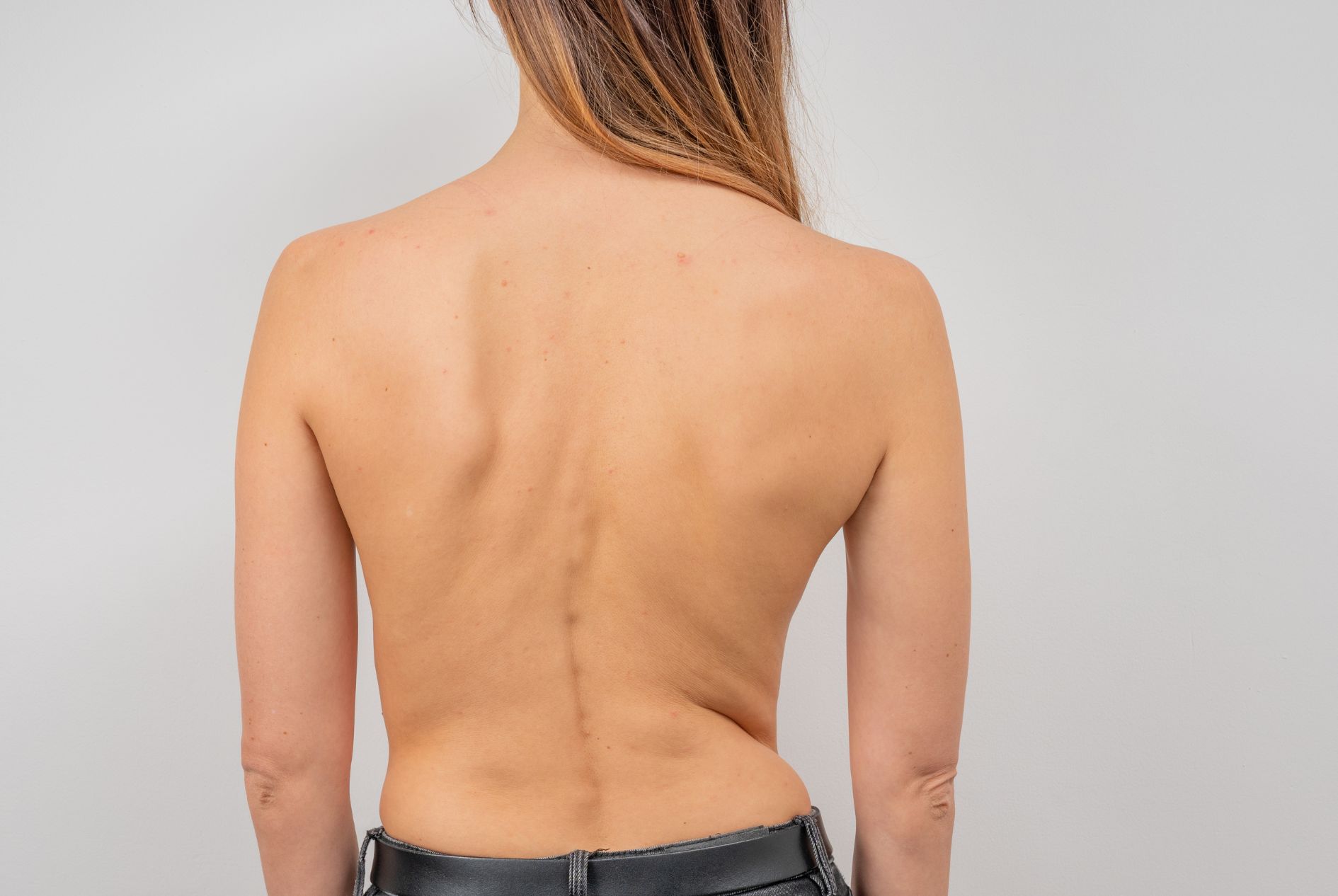
A young woman dealing with scoliosis.

What Causes Scoliosis in the Spine?

Scoliosis can develop for several different reasons, and identifying the underlying cause plays an important role in determining the most appropriate treatment plan. While some cases have a clear explanation, others develop without a known cause.

The most common type is idiopathic scoliosis, which means the exact cause is unknown. This form accounts for the majority of cases and is most often diagnosed in adolescents during periods of rapid growth. Although the precise reason it develops is unclear, research suggests there may be a genetic component, as scoliosis can run in families.

In adults, scoliosis frequently develops as a result of spinal degeneration. Known as degenerative scoliosis, this condition occurs when the discs and joints in the spine wear down over time. As the spinal structures weaken, the spine can gradually shift out of alignment, leading to curvature. Age-related arthritis, disc collapse, and osteoporosis can all contribute to this process.

Less commonly, scoliosis may be present at birth. This form, called congenital scoliosis, occurs when the vertebrae do not form properly during fetal development. Neuromuscular conditions such as cerebral palsy or muscular dystrophy can also lead to scoliosis by affecting the muscles that support and stabilize the spine.

Risk factors for scoliosis include rapid growth during adolescence, a family history of the condition, advancing age, and underlying neuromuscular disorders. While mild curves may remain stable, others can progressively worsen, particularly if left untreated.

Because the cause and severity of scoliosis vary from person to person, a thorough evaluation is essential to determine whether the curve is likely to progress and what treatment options are most appropriate. In the next section, we’ll discuss how scoliosis is diagnosed, treatment options, and how spine specialists measure the severity of spinal curvature.

What Are My Treatment Options?

Before determining the best treatment, scoliosis must first be accurately diagnosed by a spine specialist such as SpineMed Specialists. This usually begins with a comprehensive spine evaluation, including a physical exam and imaging tests like X-rays to measure the curvature and assess its severity. Understanding the degree and type of scoliosis is essential for creating a personalized treatment plan.

For mild scoliosis, careful monitoring is often sufficient. Patients are typically checked periodically to ensure the curve does not worsen, especially during periods of rapid growth in children and teens.

Non-surgical treatments focus on managing symptoms and preventing further progression. Physical therapy can strengthen the muscles supporting the spine, improve posture, and reduce discomfort. Bracing may be recommended for children or adolescents with moderate curves, helping to guide proper spinal growth while avoiding further curvature.

When scoliosis is more severe or progressive, surgical treatment may be necessary. Procedures such as spinal fusion can correct significant curvature, stabilize the spine, and improve overall function. Surgery is typically considered when the curve is causing pain, limiting mobility, or affecting other aspects of health, such as lung function.

Understanding the available treatment options is an important step, but choosing the right care provider is equally critical. In the next section, we’ll explain how SpineMed Specialists can help patients with scoliosis receive personalized evaluation, expert care, and treatment tailored to their specific needs.

An older woman back to living her life pain free after seeking surgical treatment for her scoliosis.

How SpineMed Specialists Can Help

When it comes to managing scoliosis, having an experienced and specialized spine care team makes a meaningful difference in outcomes. At SpineMed Specialists, patients benefit from personalized evaluation and treatment plans designed to address the unique characteristics of their spinal curvature.

Leading the team is Dr. Thomas Frimpong, a board‑certified and fellowship‑trained neurosurgeon with advanced expertise in complex and minimally invasive spine surgery. Dr. Frimpong completed his Doctor of Osteopathic Medicine degree at Lake Erie College of Osteopathic Medicine and went on to finish his neurosurgery residency at Virginia Tech Carilion Neurosurgery, an ACGME‑accredited program. He then pursued a fellowship in complex and minimally invasive spine surgery at Bassett Healthcare, affiliated with Columbia University College of Physicians and Surgeons in New York, where he honed his skills in treating challenging spinal conditions.

Dr. Frimpong’s approach combines clinical experience with cutting‑edge surgical techniques, with a priority on patient‑centered care. Whether a patient requires non‑surgical management or more advanced surgical correction, the goal is to improve function, reduce pain, and enhance overall quality of life. His role as a Clinical Assistant Professor at the University of Kansas Medical Center’s School of Medicine also reflects his commitment to education and staying at the forefront of spine care.

If you or a loved one are seeking expert scoliosis care and want a customized treatment plan backed by an experienced neurosurgeon, schedule a consultation with Dr. Thomas Frimpong today by clicking here or calling 316-334-3750 and take the first step toward lasting spinal health.

Frequently Asked Questions

What is scoliosis and how do I know if I have it?

Scoliosis is a condition in which the spine curves sideways, often forming a “C” or “S” shape. It can also involve a slight rotation of the vertebrae, which may make one shoulder or hip appear higher than the other. Common signs include uneven shoulders, a tilted torso, or clothes that fit unevenly. Mild cases may not cause noticeable symptoms, so a medical evaluation, including a physical exam and imaging like X-rays, is the most reliable way to determine if you have scoliosis.

What are the common symptoms of scoliosis?

Scoliosis symptoms vary depending on the severity of the curve. Early signs can include:

  • Uneven shoulders or hips

  • One shoulder blade that appears more prominent

  • Leaning to one side

  • Back pain or muscle fatigue

  • Stiffness or limited flexibility
    In severe cases, scoliosis may lead to nerve compression, causing numbness, tingling, or weakness in the legs, and can even affect lung function if the rib cage is significantly rotated.

What causes scoliosis in children and adults?

The exact cause of most scoliosis cases, especially in adolescents, is often unknown—this is called idiopathic scoliosis. Genetics may play a role, as it sometimes runs in families. In adults, scoliosis commonly develops due to degenerative changes in the spine, such as disc degeneration, arthritis, or osteoporosis. Less common causes include congenital spine deformities present at birth or scoliosis related to neuromuscular conditions like cerebral palsy or muscular dystrophy.

How is scoliosis diagnosed by a spine specialist?

Diagnosis begins with a detailed medical history and physical examination. A spine specialist looks for visible signs of curvature, such as uneven shoulders or a tilted torso. Simple tests, like the Adam’s Forward Bend Test, help reveal spinal asymmetry. Imaging studies, primarily X-rays, confirm the curvature, measure its severity using the Cobb angle, and guide treatment planning. In some cases, MRI or CT scans are used to evaluate spinal nerves or discs.

What are the treatment options for scoliosis?

Treatment depends on the curve’s severity, age, and progression. Options include:

  • Observation: Mild curves may only need periodic monitoring.

  • Non-surgical care: Physical therapy can strengthen supporting muscles, improve posture, and reduce discomfort. Bracing is often recommended for children and teens with moderate curves to prevent progression.

  • Surgery: Severe or progressive curves may require surgical intervention, such as spinal fusion, to correct the curvature, stabilize the spine, and improve function.

Choosing the right treatment depends on a careful evaluation by a spine specialist to ensure the best outcome for long-term spine health.